Workers compensation insurance protects Americans against injury, financial suffering, and job loss from incidents and accidents at work. But what about when you’re driving in situations related to your work? This area of workers compensation law can be confusing, as it includes a number of exceptions and inclusions.
To help you understand your personal coverage, here are a few key answers to your questions about workers compensation and work-related travel.
Is Your Commute Covered?
As a general rule of thumb, the commute to and from your workplace is not covered under workers compensation policies. This is often called the going and coming rule, and it stipulates that covered injuries must arise out of employment or in the course of employment. Personal travel, even to or from the workplace, generally doesn’t fit either guideline.
However, as with many facets of travel related to work, there are exceptions to this rule. These are cases when the commute is considered to be a part of employment. For example, a commute in a company vehicle may be deemed to be part of a person’s business activity and therefore eligible for coverage.
Is Driving During Work Covered?
In general, travel done at the employer’s request is a covered activity. This includes both full-time drivers such as transportation crew and bus drivers as well as those who may drive only at select times. In this case, the driving arises out of your employment and is done in the course of employment.
This provides another major exception to the rules regarding a commute. Consider an employee who travels between two of their employer’s retail stores during their shift. In this case, the commute between the two locations is for the employer’s benefit and happens while they are on the clock. So it is likely covered by workers compensation. You may even be covered if you’re commuting to a temporary work location.
Is a Work Errand Covered?
What if your employer asks you to pick up doughnuts or drop off a company package at the post office on your way home? These work-related errands will often qualify as covered travel as well. They are part of an exception known as being sent on a special mission. The mission may simply be to pick up a cake for an office party, but it’s done at the request of the employer and for the employer’s benefit.
The situation may be murkier if the work errand is done while traveling to or from work, though. The total trip may only be partially covered as part of your employment with the rest (after dropping the package in the mail) may be considered your normal commute. This may be subject to case-by-case decisions.
Is Other Travel Covered?
Driving isn’t the only work-related travel today’s employees do, of course. What coverage do you have if you’re flying on a business trip, taking the train to a client meeting, or representing your employer at a multiday trade show? As with driving at the employer’s request, business travel is generally considered covered by workers compensation.
This is one of the biggest exceptions to the going and coming rule because all your activities are more likely to be covered throughout your business trip. This includes even what would normally be considered personal activities such as dining out, relaxing in the hotel spa, or driving to the airport.
Where Can You Learn More?
Work-related travel and workers compensation coverage can have many nuances and depend largely on the specifics of each travel situation. The best place to find out whether or not you’re covered in the event of an accident is to meet with Spooner & Perkins P.C. Attorneys at Law. We’ll help you determine whether you have a case for workers compensation and find the right next steps. Call today to learn more.
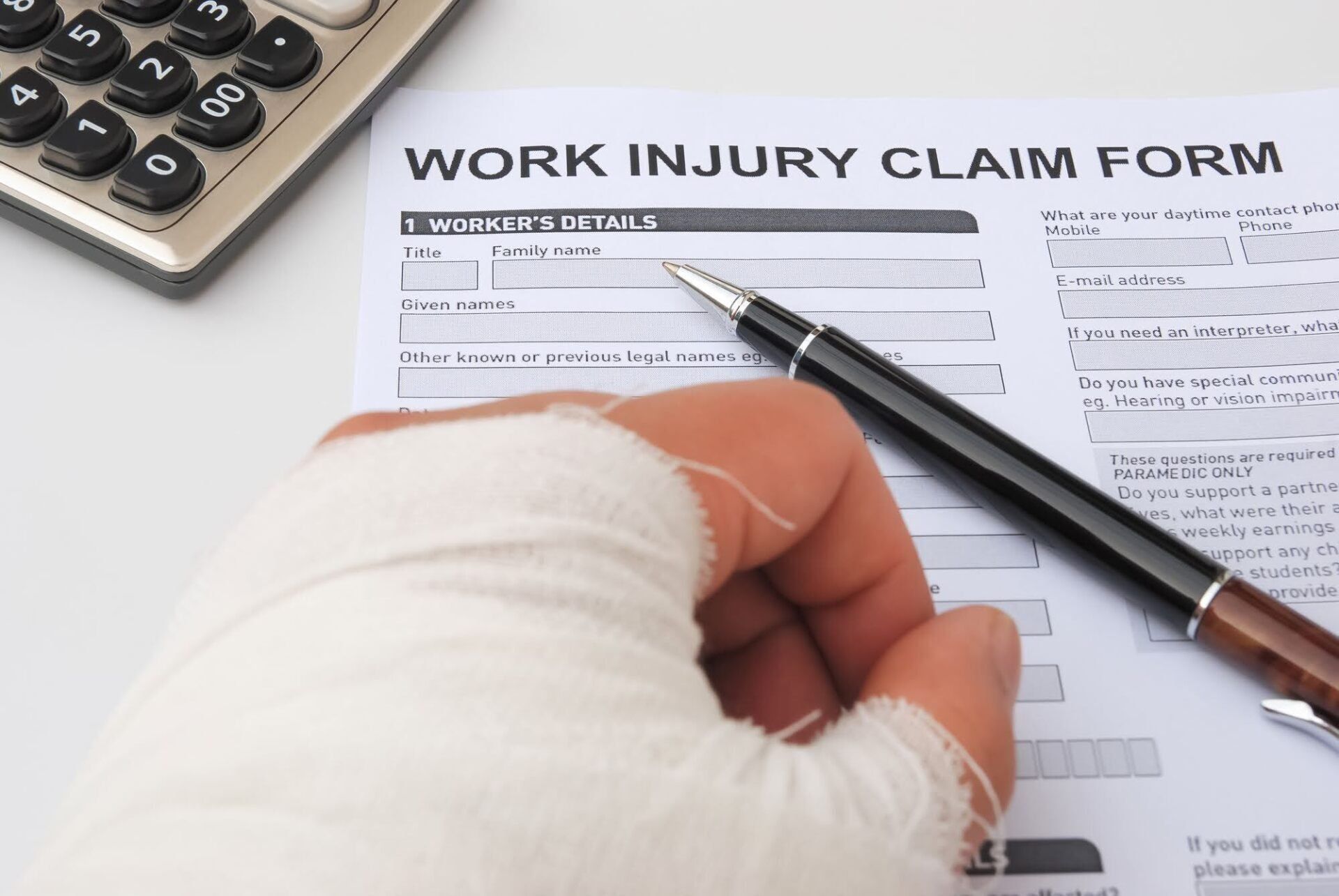
Get First Aid
Most workplaces have at least one employee trained in first aid for accident response purposes. Your workplace should also have a first aid kit. Immediately after an accident, have someone do first aid on you. First aid can prevent an injury from becoming worse, so have a trained colleague administer first aid immediately after the accident.
Seek Medical Treatment
Although the injuries you may have sustained may seem minor, they may become worse if left untreated. After an accident, you may also have underlying injuries that you don’t know about, so visit the doctor for a check-up. A doctor can verify the extent of your injuries and give you a medical report of your injuries. That report will come in handy when you file for compensation.
Have a colleague accompany you to the hospital. They can be a witness if you decide to claim compensation.
Report Your Injuries
Reporting your injuries gives you credibility and will be important if you decide to file a compensation claim. Report your accident to your colleagues if you were working alone when it occurred. This is important because your employer and other insurers may dispute your claim if there is an investigation.
A corrupt employer may pressure your colleagues to deny the incident. Therefore, you should also report your accident in the accident book. Some employers avoid reporting accidents in the accident book because of workplace-accident reduction targets. Therefore, you must take it upon yourself to ensure your accident is on the company record. If your employer refuses to record your accident, write or email them so there’s evidence that you tried to report the accident.
Another party you must report your injuries to after a workplace accident is your manager. In many workplaces, reporting an accident to your superior is required in the staff or procedure manual, so failing to report your accident to your supervisor could be considered a breach of work protocols.
A workplace accident attorney can help you establish whether your employer neglected their duty to protect you from and record any injuries at the workplace, which can strengthen your claim.
Take Photos and Videos
When you report your injuries, a dishonorable employer may try to discredit your claims. Therefore, photo and video evidence are crucial in a workplace-accident compensation claim. Take photos and videos of the accident site if your employer will not penalize you for it. Additionally, have photographic evidence of your injuries. Ensure all your photos and videos have dates to prove you took them on the day of the accident.
Ask a Colleague to Look Out for You at Work
While you are away recovering from your injuries, your employer may try to cover up what happened. Ask a trusted colleague to update you on any changes that may happen at your workplace and record the facts of the accident.
Record Your Injuries and Treatment Expenses
If the nurse or doctor did not record your minor injuries when you got to the hospital, you might have difficulty attributing them to the accident. Remember to maintain an updated record of all your symptoms from the day of the accident to prove your claim. Additionally, record all treatment expenses so you can file for compensation on them in your claim.
If you have been in a workplace accident, the attorneys at Spooner & Perkins, P.C., can help. Contact us today for a free case assessment, and if you need further legal representation, we will be there for you.
What to Do After a Rideshare Accident
Get to Safety
The first thing you should do immediately after any car accident, including one involving a rideshare vehicle, is to get yourself to safety and get the vehicle out of the road if possible. Don’t move anyone who is injured and cannot move themselves.
If you were the driver, turn your vehicle’s emergency lights on and move it out of the way of traffic if you can. Put up traffic cones or other hazard signals if you have them.
Contact the Police
As soon as everyone has made it to safety, call the police to document the accident. A thorough police report is important whether you’re the driver or the passenger, especially if you have damage on the vehicle or people are injured.
Rideshare companies’ insurance policies and personal insurance policies usually require a police report before compensation.
Missouri law also requires a police report for any car accident that results in:
· More than $500 worth of damages for any one party
· Any injuries or deaths
· Damage to a parked vehicle while the owner is not present
Document the Scene
Whether you’re an Uber or Lyft driver or a passenger in an accident, document the scene of the accident as thoroughly as you can.
If you were the driver, take pictures of your car from all four sides. Take pictures of any other vehicles involved and anything surrounding the scene.
If you have a dashcam, make sure you make a backup of the accident footage. Take a screenshot of your rideshare app to document whether you were on your way to a pickup or you had a passenger in your vehicle at the time of the accident.
If you were the passenger, make sure you take pictures of any visible injuries you have and the accident scene, including any identifying landmarks, skid marks, and vehicle debris.
While documenting vehicle damage as a rideshare passenger is often less important, having pictures of the accident scene can help corroborate information you provide about the accident to insurance companies for compensation.
Make sure to get the insurance information of every driver involved in the accident.
Seek Medical Care
Anyone in a rideshare accident should seek medical care, even if they feel fine and don’t think they are injured. Some common vehicle accident injuries can take a while to manifest symptoms, so you might not realize you’re injured right away — especially with your adrenaline pumping after an accident.
Visit your doctor, an urgent care clinic, or an emergency room to get a thorough examination so that any injuries you sustained are well documented immediately following the accident.
Contact Insurance Companies
If you’re a rideshare driver involved in an accident, you’ll need to report the accident to your company, as well as your insurance company. As a passenger, you’ll want to contact the insurance company of the at-fault driver to make a claim for any injuries or damages you sustained.
Insurance companies often try to pay as little as possible for injuries, so consult with a personal injury attorney before you agree to accept any settlement or dollar amount an insurance company offers.
Spooner & Perkins Attorneys at Law has served personal injury and workers’ compensation clients throughout the Kansas City metro area and rural Missouri for over 55 years. If you’ve been injured in an accident while you were a passenger in an Uber, Lyft, or other rideshare service’s vehicle, contact us and schedule a free consultation appointment to go over your options for a personal injury claim.
Workers’ compensation laws prescribe deadlines for injured employees to initiate their compensation claims. You should be aware of these deadlines so that you don’t miss your chance at workers’ compensation benefits. Read on to learn more about these deadlines.
Different Deadlines Apply
Several factors determine workers’ compensation deadlines. Some of these factors include the following:
Nature of Deadline
Employees have different deadlines for their workers’ compensation claims. For example, you must notify your employer about your injury or illness within a specific deadline. Workers’ compensation also has a specific duration within which your injury must reach them. These two deadlines may differ.
State Laws
State governments determine workers’ compensation laws. Thus, workers’ compensation claim deadlines vary by jurisdiction. For example:
- Missouri gives you 30 days to notify your employer about your injury and two years to file your claim with the Division of Workers’ Compensation.
- Kansas gives you 200 days to notify your employer of your injury and the same number of days to file your case with the Division of Workers’ Compensation.
Thus, the state that has jurisdiction over your workers’ compensation case determines the applicable deadlines.
Employer
Federal employees follow different workers’ compensation laws from other employees. As such, federal workers’ compensation claims also have different deadlines. You have three years to file your workers’ compensation claim as a federal worker.
Nature of Injury
Workers’ compensation claims cover accidental injuries, cumulative trauma, and occupational diseases. The main thing is that the disability relates to your work. The nature of the injury also affects the deadline. For example, occupational injuries and cumulative traumas usually have longer deadlines than accidents.
Late Notifications or Claims Are Possible
Workers’ compensation will likely deny your claim if you file it past the applicable deadline. However, exceptions exist to this rule. Below are some circumstances in which workers’ compensation may allow your claim after the deadline.
Incapacitation
Some injuries may leave you incapacitated and unable to send official notifications or file claims. At best, you may use someone (such as a workers’ compensation lawyer) to handle the notifications on your behalf.
However, even such arrangements are not always possible. For example, you may not be able to do anything if you are in a coma. A disability that requires immediate and prolonged inpatient treatment can also prevent you from filing your claim.
Quarantine
Highly contagious diseases often require isolation or quarantine to avoid spreading the infections to others. The notification deadline might stretch beyond the employer notification deadline. In such a case, workers’ compensation may allow your late notification.
Unclear Reporting Rules
Employers play a significant role in workers’ compensation claims. For example, employers should inform their employees on workers’ compensation notification and deadlines rules. Workers’ compensation laws require employers to post notices on these rules. You may file a late claim if you did not know about these rules because your employer failed to post the notice.
Employer Awareness
Lastly, you may also succeed with a late claim if your employer was or should have been aware of your injury. Consider a case where you slip and fall while walking around a warehouse with your supervisor. In such a case, your employer (through the supervisor) should be aware of your injury. Another example is if your employer learns about your injury from your colleagues.
Whatever the deadlines say, you stand to benefit the most if you notify your employer about your injury as soon as possible. For example, the sooner you make the notification, the faster your claim process will begin, and the faster you will get your money. Contact Spooner & Perkins P.C., to help you process your workers’ compensation claim and benefit from our decades of experience.

Workplace accidents are common, but they are not always cut and dry. There are many misconceptions about workplace accidents. If you would like to know more, check out these five common misconceptions about workplace accidents.
1. Myth: Office Workers Don’t Need to Worry About Injuries
You may feel that office workers don’t need to worry about workplace injuries. Unlike employees in more physical jobs, they aren’t handling major equipment, heavy boxes, forklifts, etc. However, regardless of your job, you could experience a workplace injury, such as fire exposure or a trip/fall.
However, office workers face other potential risks, such as possible hazardous or unclean indoor air. Poor indoor air quality can affect employee performance by preventing employees from breathing comfortably. Some may get sick more often.
Lastly, office workers have to sit at a desk for long periods of time, staring at a computer screen. For this reason, they are also at risk of developing eye strain or various ergonomic injures, such as carpal tunnel syndrome, forward head position, etc.
2. Myth: If You Were at Work: You Are Covered
If you were working at the time of the accident, you should be covered by workers’ compensation. However, insurance carriers and your employer don’t love paying money, so they may try to fight your claim. Your employer may claim you weren’t working at the time of the accident. For example, they may say you were leaving to go get lunch.
If you had a pre-existing condition, the insurance company may try to use this against you. You and your attorney will need to prove that work directly worsened the pre-existing condition. Other instances in which your claim may be denied include missed deadlines and filing after you leave the job.
3. Myth: You Can’t Ever Sue After a Work Injury
Typically, you can’t sue after a workplace injury, but there are a few exceptions. First, if your employer doesn’t provide workers’ compensation, you can sue. Similarly, if you file a claim but it is denied, you may be able to sue your employer, but you and your attorney will have to prove your case.
If a third party caused your injury, such as a defective product, you can sue the third party. If someone purposely attacked you or caused you injury, you may be able to sue. If you do get money from a lawsuit, you will need to pay back some or all the workers’ compensation.
4. Myth: Minor Injuries Don’t Need to Be Reported
After you are injured at work, there is a deadline to report the accident and file for workers’ compensation. However, if you only sustained a minor injury, you may see no point in reporting the accident. However, this could be problematic in the future.
If the accident ends up causing more injury than you realized, you may end up waiting too long to file. Even if you do file within the timeframe, failing to immediately report the injury reflects poorly on you, so they may deny your claim. In addition, if another injury aggravates the first injury, having the first injury on file could help your case.
5. Myth: Safety Requires Too Much Time and Money
Many employers shy away from safety training because they assume it costs too much money and takes up too much time. While occasional safety meetings are important, keeping employees safe doesn’t take much time. Posters placed in common areas like the break room can provide needed safety information.
In regard to money, your employer may have to spend some money to reduce hazards. However, in the long run, that will save them money by reducing the risk of injury.
If you’ve been injured while at work, consider hiring a skilled attorney. Your employer and the insurance carrier may try to fight your claim. If you would like to know more, contact us at Spooner & Perkins, P.C. today.
A request for the production of documents is one of the discovery tools parties to a case may use to learn more about the case. For example, the defendant in your auto accident case can submit a request for the production of documents to learn more about your preexisting injuries. Below are some tips on how to deal with such a request.
Respond in Time
Understand and respect the deadline. A request for the production of documents has a deadline within which you must submit your response. You must submit your request within the deadline or face the consequences.
For one, the defendant might file a motion to compel you to produce the documents with the court. The court might find you in contempt of its orders if you still don’t respond. Second, you risk a default judgment against you if you don’t respond in time.
Object If Necessary
Although you must respond within the deadline, you don’t have to produce every document that the defendant requested. You can object to the requests provided you have reasonable grounds for your objections. Below are a couple of objection grounds that the court might accept.
Burdensome Request
A good request is a reasonable request – something you can get without too much struggle within the stipulated deadline. That means the request should also be specific enough so that you understand what the defendant wants exactly.
For example, a request to produce all documents related to the case is too ambiguous and vague. You can object to such a request as too burdensome for you to meet.
Privilege Request
You don’t have to hand over privileged information to the defendant even if they include it in their request for the production of documents. For example, the defendant doesn’t have the right to access communications between you and your lawyer – the information is privileged.
Redact Necessary Parts
Sometimes, a defendant might request a document with sections of privileged, sensitive, or personal information. In such a case, you can redact or block out the information you don’t want the defendant to have.
Consider a case where a defendant wants a copy of a document with your bank account number or your children’s names. You can black out such information and still send the document to the defendant. Just make a note of the redacted documents and information somewhere to be on the safe side.
Answer in Writing
Although a request for production involves documents, you should submit a written answer to the requests plus copies of the requested documents. A request for production of documents will list the documents the defendant requires – most likely in a numbered list. You should answer each list and specify whether you have supplied the document or objected to the request.
Send Copies of Documents
Don’t send original documents. Otherwise, you might lose your precious documents due to an accident or the defendant’s error. Make copies of the documents, send the copies to the defendants, and keep the originals.
Don’t send your original documents even if you cannot make their copies. In such a case, inform the defendant that you cannot make a copy of the document and invite them to inspect the document in your presence. That way, you can keep an eye on the document at all times to prevent accidental damage or loss.
An experienced injury lawyer can help you handle the discovery process. Spooner & Perkins Attorneys at Law has over 65 years of experience in personal injury law. We pride ourselves on aggressive representation for our clients. Contact us for a consultation on your injury case to determine the best way to get you fair compensation.
TIPS TO HELP YOU REGAIN YOUR LIFE AFTER AN ACCIDENT

An accident can affect your life in various ways. Your body, mind, and finances can all suffer. You need to take active steps to minimize these effects and get your life back on track. Otherwise, the effects might be long-term or permanent. Below are some mitigation measures that can help.
Get the Best Medical Care Possible
Your priority should be to recover your pre-accident health as soon as possible. Getting medical care can help you do this. For example, you should:
- Ride an ambulance to the hospital if you have serious injuries or if the first responders suggest it
- Consult relevant specialists, such as orthopedists, if your general physician suggests it
- Follow your doctors’ instructions to the letter
- Practice healthy living, for example, by exercising and eating nutritious foods
Consider assistive devices, such as hearing aids or wheelchairs, in case of permanent injuries.
Seek and Accept Help
Many accidents cause both physical and mental limitations. For example, you might struggle with:
- Engaging in tasks that require memory problems
- Standing for long periods
- Sitting for long periods
- Walking
- Carrying heavy things
You might be frustrated if you have to depend on others while recovering. However, trying to do everything on your own can hinder your recovery. Do not hesitate to ask and accept help, whether paid or free.
Lean on Your Friends
Accidents cause both physical and emotional injuries. An accident can leave you depressed, anxious, and socially withdrawn. For some people, recovering from emotional injuries takes more time than recovering from physical injuries. Leaning on your loved ones can help accelerate your recovery.
Consider:
- Sharing your fears and feelings with friends and family members
- Accepting help from your loved ones
- Enjoying social engagements with your loved ones
The idea is not to suffer in silence. Your loved ones can even help you get help if you share your experiences with them.
Seek Professional Counseling
Extreme psychological problems require professional intervention. Do not hesitate to seek therapy if your problems overwhelm you. Also, consider therapy if your loved ones suggest it since they might notice some of your emotional issues sooner than you.
Don’t Delay a Return to Normal Life
A return to normal life can also help your post-accident recovery. Try to get back to your pre-accident routine once you have physically healed. Resume the activities that you used to enjoy before the accident. For example, you might resume:
- Driving the kids to school
- Going on weekend hikes
- Doing your laundry
- Meeting friends for drinks
- Going to bed and waking up at definite times
Staying active will help both your physical and emotional healing.
Seek Maximum Compensation
An accident can affect your financial status in numerous ways. For example, you might:
- Miss work for some time
- Pay expensive medical bills
- Suffer expensive property damage
- Have to modify your house and car to accommodate a disability
- Require help with everyday chores
The best way to recover your finances is to seek maximum compensation from the liable party. A few tips to help you get maximum compensation include:
- Gathering and preserving evidence of your accident
- Including all the potential defendants in your accident claim
- Understanding and valuing your damages accurately
- Hiring a lawyer to negotiate or litigate your claim
- Understanding what the law says about your injury
Spooner & Perkins Attorneys at Law can play a part in helping you reclaim your life after an accident. We can analyze your accident circumstances and help you get the damages you deserve. Contact us today to start working on your case. We look forward to seeing you soon and answering any questions you may have.
Workplace injuries can find you ill-prepared for the subsequent legal process. Often, injured workers make costly mistakes that reduce their potential compensation. Thus, you need to know the proper steps to take after a workplace injury to receive the benefits you deserve. Learn about some mistakes to avoid after a workplace accident.
Failure to Report the Accident Promptly
Some injured workers hesitate to report a workplace injury out of fear that it will affect their income or job. If you wait to see how serious the injury is, you give your employer a window to deny that the accident happened at work.
What’s more, state laws provide workers with a time limit to report workplace incidents. For example, Missouri gives employees 30 days to report an accident or discovery of injuries to supervisors. If you miss this window, you may have a difficult time to prove that the injuries happened at work. Moreover, you may get a reduced compensation or none at all.
Most employers also require employees to file a first report immediately. Your employer can reprimand or suspend you without pay if you fail to report the injury promptly. You should notify your employer in writing and include the injury’s date, place, and time. Keep a copy of this notification to show your attorney.
Failure to Seek Medical Care
Resist the urge to wait out or downplay work-related injuries. Prompt medical treatment offers two major advantages. First, it gives employers or insurance companies less room to deny that the injuries are work-related. Next, you set yourself up for a quick recovery if you start the treatment process early.
Often, employees don’t seek medical care for injuries they deem to be minor. However, waiting can affect the amount of compensation you get. Also, let the doctor know all your symptoms, however minor. If you mention other injuries later, the insurance company may claim that you are exaggerating your injury because you want to get more compensation than you deserve.
You should visit the nearest emergency room for urgent medical conditions. If your injury isn’t severe, check your state’s guidelines on where to go for treatment. In Missouri, employers choose health care providers for their injured employees. However, you can petition the state’s Department of Labor Workers’ Compensation division to change a doctor.
Failure to Resume Work When You Can
While you may want to take all the time you can to recover, you may jeopardize your benefits if you go against the doctor’s recommendations for work resumption. The doctor may recommend lighter duties or mandate your employer to fit you in a less demanding job.
However, the physician may keep you off work until you reach maximum medical improvement (MMI). In other words, you resume work after you have healed from the injury as much as the doctor expects you to.
However, insurers can pressure physicians into releasing injured employees to go back to work. In fact, the insurer can send you to another physician for an Independent Medical Exam. Keep in mind that your employer shouldn’t force you to go back to work. Thus, consult an attorney if an employer or insurer harasses you.
Failure to Consult an Attorney
Employers involved in personal injury cases may try to rid themselves of liability. On the other hand, insurers want to pay as little compensation as possible. Thus, none of these parties represent your interests.
In contrast, a personal injury attorney protects your rights and negotiates favorable settlement offers. Moreover, an experienced lawyer knows how to deal with aggressive insurers. The employer may attempt to fire or demote you in other cases, and you need expert legal advice to fight back.
If you sustained injuries at work, you deserve the time to heal and recover. Our legal team at Spooner & Perkins, P.C., Attorneys at Law will prepare the best case for you so you can rest. Contact us today for professional legal guidance.
WHY HIRE A LAWYER WITH SPECIALIZED EXPERIENCE
The legal profession has different specializations, such as criminal, injury, and family law. Some lawyers handle cases in different legal specializations, while others specialize in specific areas. Your lawyer will tell you whether they can handle your case during the consultation. However, consulting a specialized lawyer has several benefits over consulting a general lawyer.
Below are some reasons to consider a specialized lawyer.
Familiarity With Local Judges
A specialized lawyer understands the local courts, prosecutors, and judges better than a generalist does. For example, a family lawyer probably understands the judges who usually handle divorce cases better than a personal injury lawyer does. The knowledge comes from the numerous family law cases that the lawyer has handled over the years.
Intimate knowledge of the local court means the specialized lawyer:
- Understands how the judges rule on certain cases
- How much leeway the judge can allow those in their courtrooms
That way, the lawyer can better prepare their strategies to give you the best outcome possible. For example, say your family lawyer understands that a certain judge has extremely unfavorable views of parents who don’t have time for their kids. Your lawyer can use the information to strengthen your custody battle by presenting strong evidence of your childcare history.
Adequate Relevant Experience
Experience plays a significant role in legal practice. Some of the things lawyers learn with experience include:
- Improving interpersonal relationships with clients
- Dealing with bureaucracy in court
- Negotiating cases, such as plea deals
A lawyer’s experience is even better if it comes from the same area of law. A specialized lawyer:
- Has a good understanding of local statutes that affect their legal area
- Has specific experiences that are not easy to get in other legal areas
- Understands the typical red flags of cases in their legal area
For example, a personal injury lawyer of ten years probably has better negotiation skills than an estate-planning lawyer of ten years. Personal injury cases involve more negotiation than estate planning.
Another example is a family lawyer may spot signs of hidden assets easier than a criminal lawyer could, even if both have practiced law for the same number of years. Hidden assets are common in divorce cases.
A criminal lawyer is also likely to have more courtroom experience than estate planning lawyers.
In short, specialization gives lawyers extensive experience within a short time.
Abundant and Relevant Contacts
Lawyers require more than skills and experience to prevail for their clients. Your lawyer will also rely on their contacts and relationship with other professionals your case may need. For example, some cases need expert witnesses or private investigators. A specialized lawyer may get the right expert faster than a generalist can.
For example, an experienced medical malpractice lawyer already has many expert witness contacts. The lawyer has probably worked with such witnesses in the past. Thus, the medical malpractice lawyer doesn’t need to start hunting for, interviewing, and vetting expert witnesses every time they have a case. The available contacts and working relationships save you time and money.
Peace of Mind
Legal cases are expensive and worrisome for many people. The more serious your case, the more is at stake, and the more you are likely to worry. Extreme worry is bad for your health, relationships, and even work. Hiring a specialized lawyer is one way of dealing with the worry. You may be able to rest easy knowing that your case is in the hands of the right person.
Spooner & Perkins, P.C., specialize in workers’ compensation and injury law. We have been active in this industry for decades. You can rely on us to pursue your rights and compensation aggressively. Contact us for a free initial consultation to review your case and determine the way forward.

If an incompetent driver borrows a car from someone, the legal theory of negligent entrustment allows you to pursue damages against the car owner. Below are four things you must prove to succeed with the negligent entrustment claim.
1. The Car Owner Entrusted Another Person With the Car
First, prove that the car owner entrusted another driver with their car. That is, the driver must have taken control of the car with the owner’s knowledge. An example is someone who loans their car to a neighbor or friend.
However, negligent entrustment law doesn’t apply if the driver acquired the car without the car owner’s knowledge. For example, the law won’t apply if someone steals your car and causes an accident with it.
2. The Person Was Incompetent
Secondly, prove the driver’s incompetency. You can use the following factors as proof.
Lack of Driving License
A driving license certifies that someone is fit to drive. Thus, someone without a driving license is unfit to drive. That is the case whether the person has never had a driving license or the authorities have suspended/revoked their license.
Intoxication
Intoxication impairs judgment, reduces reaction times, induces sleepiness, and has many other effects that make driving dangerous. Thus, an intoxicated person is an incompetent driver.
DUI Convictions
A history of DUI convictions is also a sign of incompetency. The correlation applies even if the driver wasn’t intoxicated when they received the car from its owner. The more the past convictions are, the more accurate this analysis is.
History of Recklessness
A history of reckless driving, especially recklessness that leads to accidents, also shows incompetency. For example, say the driver has been involved in a road rage incident, has multiple traffic tickets, among other driving mishaps. A reasonable person would agree that such a driver is incompetent.
Dangerous Medical Condition
Lastly, some medical conditions also make driving dangerous. For example, unexpected and frequent seizures increase the risk of an accident. Thus, a driver with such a health condition is incompetent.
3. The Car Owner Knew About the Incompetency
Third, negligent entrustment only applies if the car owner knew about the driver’s incompetency. This knowledge can be either actual or constructive.
Actual knowledge means that the car owner specifically knew that the driver was incompetent. For example, say the driver showed up staggering and with alcohol in their breath. In such a case, the car owner knew that the driver was intoxicated.
Constructive knowledge means that the driver should have known about the incompetency. Consider a junior teenager who borrows a car from their neighbor. The teenager doesn’t have a driving license, but the neighbor neither confirms this fact nor the teenager’s age. You can use negligent entrustment against the car owner if the teenager causes you injuries in an accident.
4. The Driver’s Incompetency Caused the Accident
Lastly, you should know that negligent entrustment only applies if the incompetency directly caused the accident. Consider a driver with a history of multiple DUIs who ends up drinking and driving after borrowing a car. You can pursue a negligent entrustment claim against the car owner if the intoxication causes the driver to lose control of the car and crash into you.
The situation is different if the driver crashes into your car because the car’s braking system is defective. In such a case, you have to use alternative legal theories to pursue your auto accident damages.
Spooner & Perkins P.C. have a long history of fighting for injury victims’ rights. We know the tactics insurance companies use to avoid spending a lot of money on your case. Contact us for a consultation on your auto accident case to determine how to get maximum compensation for you.
Connect with us


- July 2026
- June 2026
- May 2026
- April 2026
- March 2026
- February 2026
- January 2026
- December 2025
- November 2025
- October 2025
- September 2025
- August 2025
- July 2025
- June 2025
- May 2025
- March 2025
- December 2024
- November 2024
- October 2024
- September 2024
- August 2024
- July 2024
- June 2024
- April 2024
- February 2024
- January 2024
- December 2023
- November 2023
- September 2023
- August 2023
- May 2023
- April 2023
- March 2023
- February 2023
- January 2023
- November 2022
- October 2022
- September 2022
- August 2022
- July 2022
- May 2022
- April 2022
- March 2022
- February 2022
- January 2022
- November 2021
- October 2021
- September 2021
- June 2021
- May 2021
- April 2021
- March 2021
- February 2021
- January 2021
- November 2020
- January 2019
- November 2018
Archives

Contact Us
- 816-572-6324
-
1201 East Street
Parkville, MO 64152
Hours
Mon-Fri 8:00am-5:00pm
Sat-Sun Closed
Call Us 24 Hours a Day